In theory, the Incoterms They might seem simple. In practice, they can make the difference between a smooth operation and a logistical disaster.
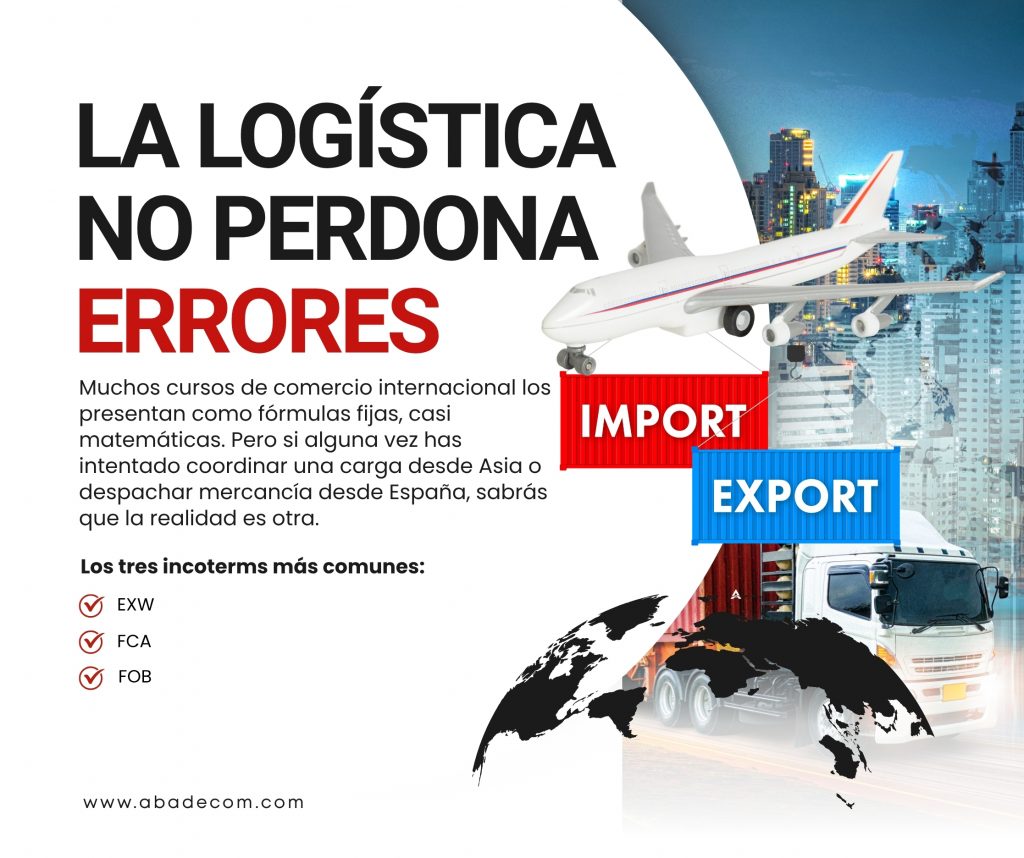
Many international trade courses present them as fixed, almost mathematical formulas. However, when the time comes to coordinate a shipment from Asia or clear goods from Spain, reality shows that every detail counts.
Below, we share a brief and practical guide based on real-world experience with three of the most commonly used Incoterms in international operations:
1. EXW (Ex Works)
- In theory: The buyer assumes all logistics from the supplier's door.
- In practice: Without a local agent or a freight forwarder without reliability, export collection and dispatch can become a real headache. Hidden costs arise, control over the cargo is lost, and the operation can blow the budget before it is even shipped.
2. FCA (Free Carrier)
- In theory: The seller delivers the goods to a carrier nominated by the buyer.
- In practice: It is a more balanced option. The seller assumes export clearance (crucial), while the buyer manages the rest. It is ideal if greater control from the origin is required. The risk lies in intermediate costs or poor document management.
3. FOB (Free On Board / Free on Board)
- In theory: The seller delivers the goods on board the vessel.
- In practice: It is one of the most widely used… even in cases where it does not apply, such as air freight or full container loads (a frequent mistake!). It works well when the supplier has direct access to the port of departure. In operations in Asia, many prefer it to define precisely —and to avoid cultural or linguistic misunderstandings— where the supplier's responsibility ends.
Conclusion
Negotiating Incoterms should not be done solely with price in mind. It is essential to analyse them with a strategic vision:
- Who is in control?
- Who ensures the visibility of the operation?
- Who takes responsibility at each stage?
In international logistics, it is the details that make the difference between winning and losing.
At Abadecom We help SMEs make strategic decisions in foreign trade, reducing risks and optimising every operation.