
Photoluminescent tile for marking or signposting.
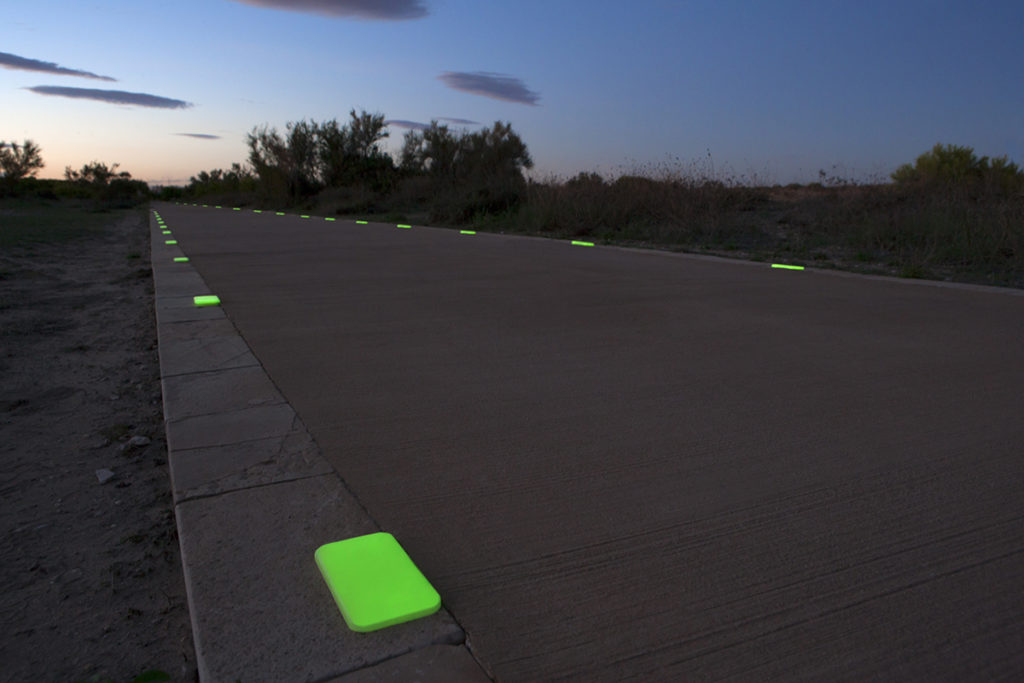
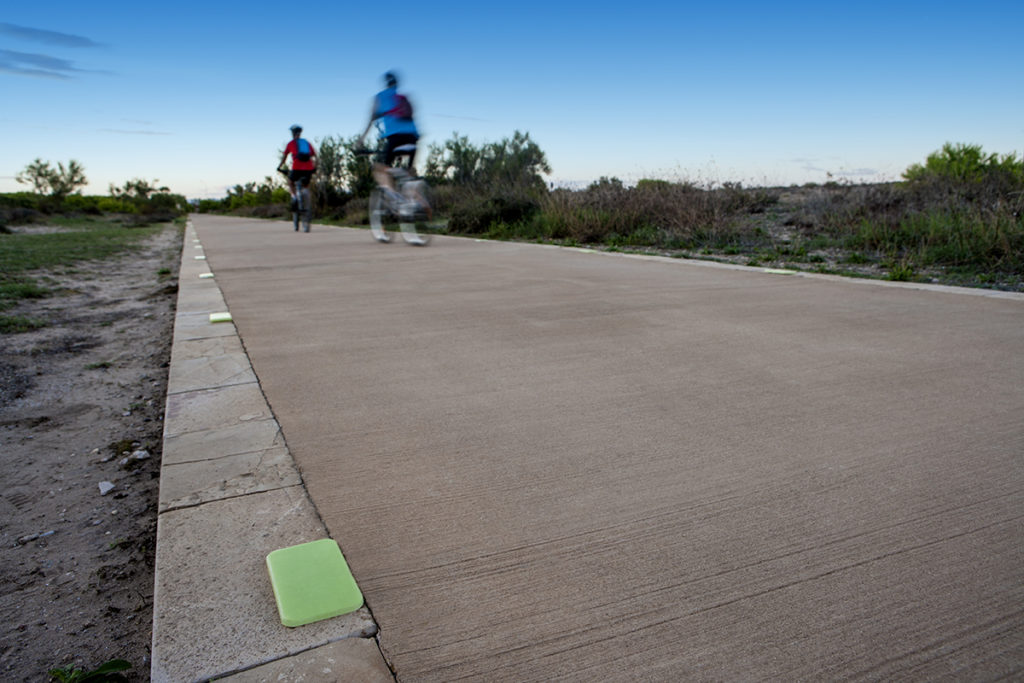
When night falls, the street lighting goes out or the illumination is insufficient, safety and orientation should not depend on an electrical installation. The encapsulated photoluminescent tile it is a professional solution of beaconing and signposting which, after being charged with sunlight or artificial light, glows in the dark for more than 12 hours, guiding routes and demarcating walkways with clear and continuous visibility.
Scope
Designed to signal and mark out unlit or poorly lit areas, it is ideal for:
- Cycle lanes and shared paths.
- Tourist, archaeological and astrotourism routes.
- Running paths and sports circuits.
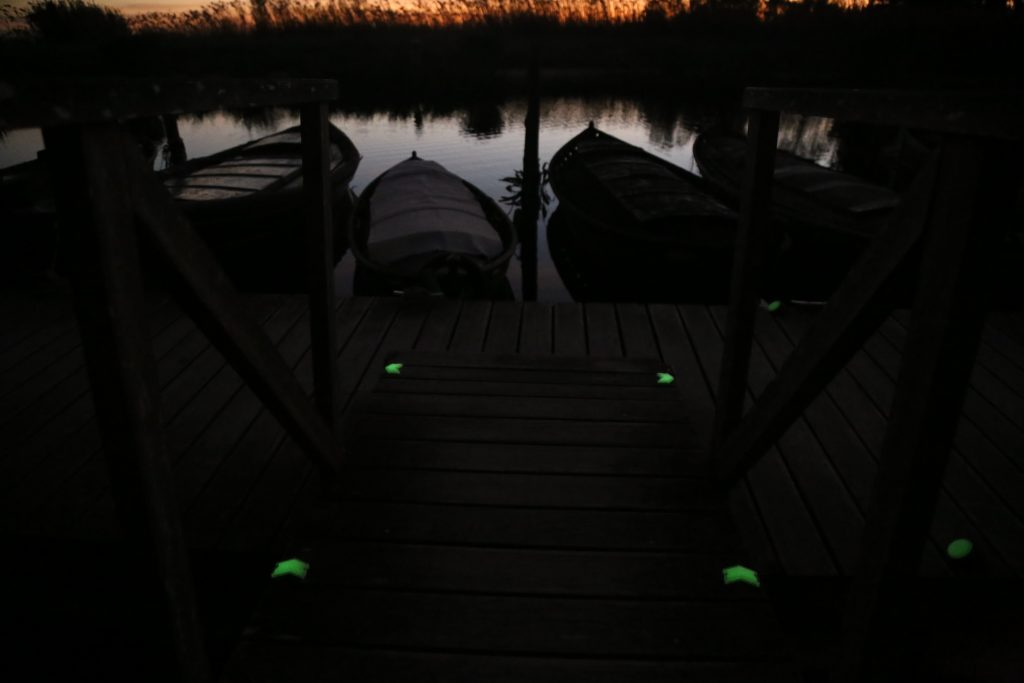
- Footbridges, stairs and itineraries in natural parks.
- Viewpoints, sports pitches and port applications, among others.
Properties
- Sunlight or artificial light activationit charges easily under normal conditions of use.
- High visibility in the dark and in poorly lit environments.
- Suitable for outdoor use: water-resistant and UV-resistant.
- Very high impact resistance, suitable for demanding environments.
- Luminescent autonomyonce charged, it holds more than 12 hours brightness in dark conditions.
Instructions for use
The tile is fixed to the surface by means of a fixing resin, ensuring a stable and durable installation according to the needs of the substrate and the project.
It must be taken into account
In order for the luminescence effect to be appreciated, no light must shine directly onto the piece.
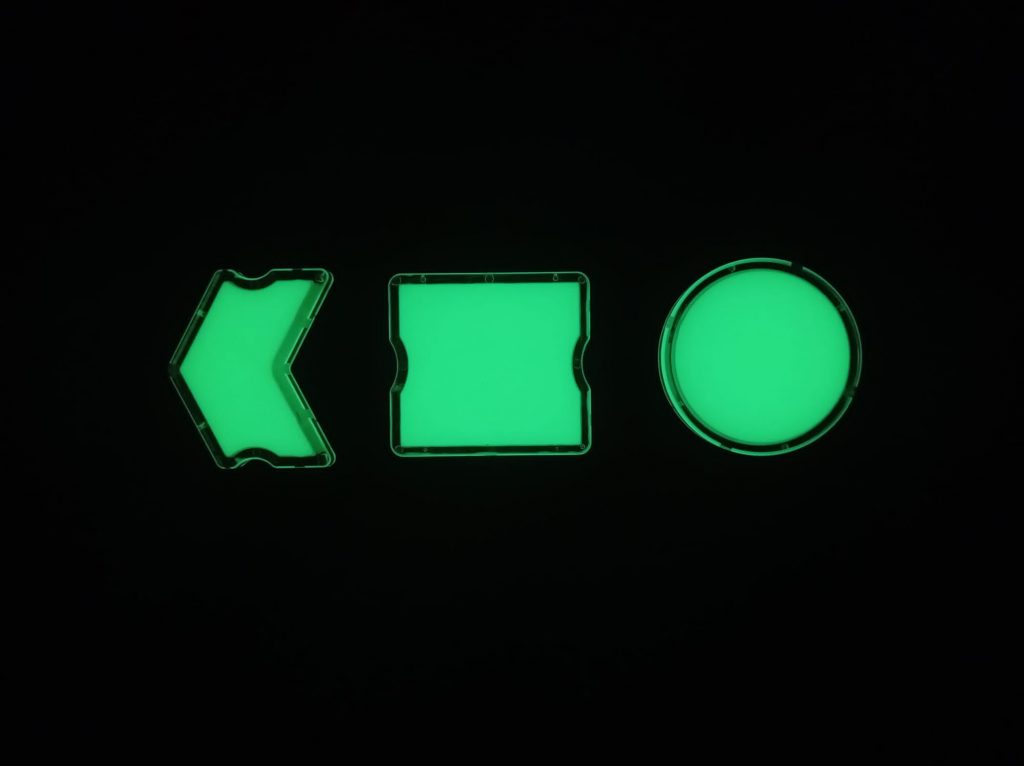
Available formats
- Circular: Ø 70 mm
- Square: 71×65 mm
- Arrow: 70×50 mm
- Rectangular: 70×40 mm
Properties of the photoluminescent piece
- Bright green colour.
- Duration of glow: More than 12 hours.
- Operating temperature range: -15ºC to 50ºC.
- Luminance after 10 minutes: Greater than 1,300 mcd/m2.
- Luminance after 60 minutes: Greater than 190 mcd/m2.
- UNE 23035 (*) luminance decay time: Greater than 26,600 minutes.
(*) Logarithmic extrapolation according to UNE 23035 until obtaining the time at which the luminance reaches 0.3 mcd/m2.
The technical data shown are the result of laboratory tests.